PLATE ROLLING MACHINE
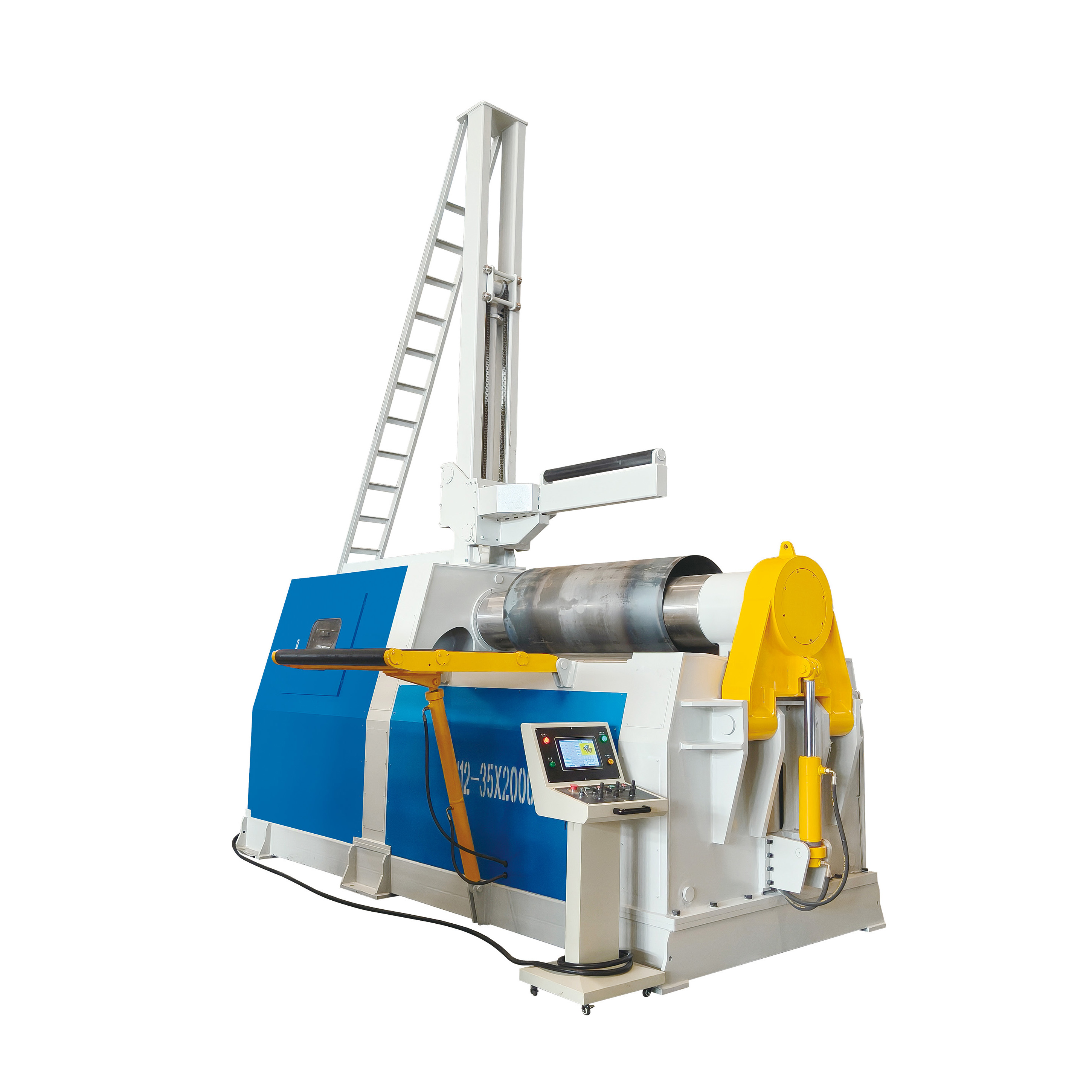
W12-35X2000 Plate Rolling Machine
W12-35X2000 Plate Rolling Machine
Product Images
Technical Specifications
| Parameter | Value |
|---|---|
| Model | W12-35x2000 |
| Max. bending thickness | 35 mm |
| Max. pre-bending thickness | 30 mm |
| Max. bending width | 2000 mm |
| Top roller diameter | 430 mm |
| Main power | 22 KW |
| Weight | 23000 KGS |
| Dimension | 4200x1980x2240 mm |
Application Videos
Frequently Asked Questions
How do I choose the right plate rolling machine?
Start with the material grade, maximum thickness, working width, target inside diameter, production volume and required roundness. Send these values through the inquiry form so an engineer can verify the roll configuration and recommend a published model or a custom design.
What is the difference between 3-roll and 4-roll plate bending machines?
A 3-roll machine is often selected for flexible general fabrication, while a 4-roll machine can simplify clamping, pre-bending and repeat production. The better choice depends on plate thickness, material strength, diameter range, operator workflow and expected volume—not on roll count alone.
What technical information should I provide for a machine recommendation?
Please provide maximum and minimum thickness, working width, material or yield strength, required diameter, cone or cylinder geometry, annual volume and any relevant drawing. For example, a request for 20 mm plate, 3,000 mm width and a 2,000 mm diameter gives the engineering team a useful starting point, but final capacity must be checked against the approved data sheet.
Why is pre-bending important for shell quality?
Pre-bending reduces the straight edge or flat-end section before the plate is closed into a shell. It affects fit-up, welding preparation and the achievable diameter tolerance. The required method depends on the roll geometry, plate thickness, material strength and whether the application is a cylinder or cone.